








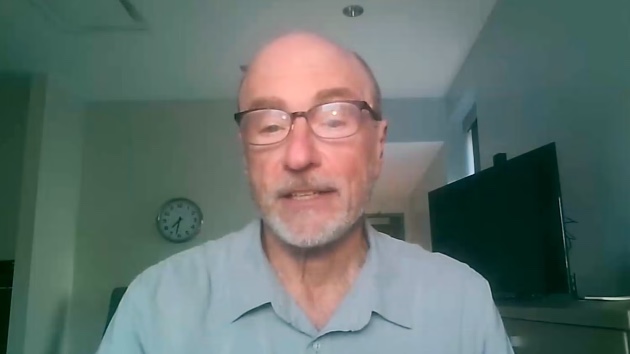
(NEW YORK) — The American doctor who was on the MV Hondius cruise ship and initially tested positive for hantavirus has since tested negative and says “there’s no evidence that I’ve had hantavirus.”
A doctor from the biocontainment unit in Nebraska said the initial test was most likely a falsely positive, based on further testing.
Dr. Stephen Kornfeld — the only American to test positive for hantavirus — came down with flu-like symptoms on the cruise ship, and on Monday he was admitted to the University of Nebraska Medical Center’s biocontainment unit following a positive test, officials said.
The Bend, Oregon, resident has since tested negative and was cleared to relocate to Nebraska’s quarantine unit, where 15 other passengers from the cruise ship who do not have symptoms are being monitored.
“I physically feel great — I have felt great for many, many days,” Kornfeld told ABC News. “Emotionally I feel wonderful. It’s nice to be negative for hantavirus.”
The medical director of Nebraska’s biocontainment unit, Dr. Angela Hewlett, told ABC News’ Victor Oquendo, “I suspect that the initial test was a false positive.”
“If we had seen evidence of previous exposure or previous infection to hantavirus with our serology test, then that would have been a little more indicative of maybe he had had an illness and he was fortunately getting better,” Hewlett explained. “We didn’t see any evidence of that and so it looks like he has not had this illness at all thus far.”
Kornfeld said the initial test was taken after he came down with a flu-like illness on the ship.
“I got sick just a few days after the gentleman who had hantavirus got sick — he ultimately passed away from it. And my illness certainly wasn’t as severe, but it was a typical viral illness with sweats and fatigue and cough, sore throat, and a lot of upper respiratory symptoms,” he said. “I just attributed it to the ship flu, and I think in retrospect, it was.”
“I’m fairly confident he never had hantavirus, but that doesn’t mean he didn’t necessarily have an exposure,” Hewlett said.
“In fact, I had a lot of exposure when I was the ship’s doctor,” Kornfeld said. “I’m still in the incubation period. The virus may still be in me and I may develop symptoms of the virus.”
He said he is following protocol by isolating himself in Nebraska’s quarantine unit.
“I will keep track of my symptoms,” he said. “And if I get any symptoms, then I’ll be tested. Because getting new symptoms does not mean it’s hantavirus — I could come down with another virus, like a cold or something similar.”
Kornfeld said he is weighing whether to complete the entire 42-day quarantine in Nebraska or to finish from his home in Oregon. If he does go home, he said it would not be on a commercial aircraft.
“I think everybody in this unit is sort of having that discussion with their own health system and with their family. Some will probably stay here the entire time, some may ultimately go home,” he said.
“I’m thinking that I may eventually want to go home … it would be very safe to send us home and then we could complete the quarantine in a much more familiar situation,” he said, adding, “everybody here is committed to completing their quarantine.”
Copyright © 2026, ABC Audio. All rights reserved.


